
Is Praise the Same as Worship? A Biblical and Musical Breakdown
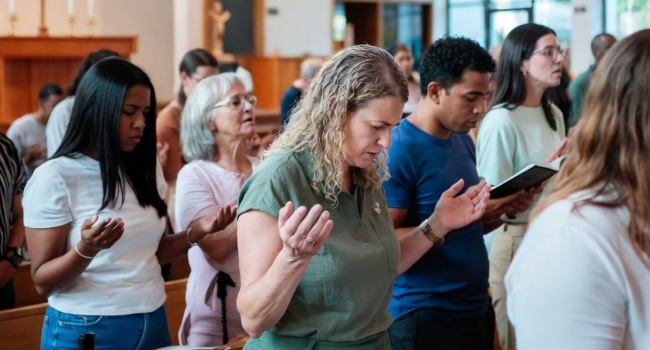
Is Praise the Same as Worship? A Biblical and Musical Breakdown. In today’s contemporary Christian music culture, the phrase “Praise and Worship” is often spoken as if it describes a single, unified genre. It appears on streaming playlists, church bulletins, and conference banners across the globe.

Yet beneath that familiar pairing lies a meaningful distinction. Praise and worship are closely related expressions of devotion, but they are not identical. Each carries its own biblical weight, theological depth, and musical character. Exploring their differences enriches both private faith and corporate gatherings.
Biblical Foundations: Celebration and Surrender
Throughout Scripture, praise and worship are woven into the story of God’s people, though they carry distinct shades of meaning.
Praise is outward and declarative. It is the joyful acknowledgement of who God is and what He has done. The Psalms are filled with this language. Psalm 100:4 calls believers to enter God’s gates with thanksgiving and His courts with praise. Psalm 150 paints a vibrant scene of instruments, dancing, cymbals, and shouts of joy. Praise celebrates God’s mighty acts, His provision, His deliverance, and His faithfulness. It is often communal and expressive, drawing people together in shared testimony. Thanksgiving and praise move hand in hand, recounting what God has done to stir confidence and joy among His people.
Worship, by contrast, reaches deeper into the posture of the heart. The Hebrew and Greek words translated as worship often imply bowing down, kneeling, or prostrating oneself. In John 4:23–24, Jesus teaches that true worshipers will worship the Father in spirit and in truth. This form of devotion focuses not only on God’s works but on His intrinsic worth, His holiness, majesty, and sovereignty. Romans 12:1 expands the idea further, describing worship as a living sacrifice. It is not confined to a song or a moment. It is a life yielded in surrender.
Praise frequently leads into worship. Gratitude opens the heart, and celebration softens it. Yet worship moves beyond celebration into reverent awe. Praise proclaims; worship bows. Praise often flows easily from grateful lips; worship asks for vulnerability and surrender.
Historical Development: From Hymns to Choruses
The modern Praise and Worship movement gained momentum in the 1960s and 1970s during the Jesus People revival and the broader charismatic renewal. Music began to shift stylistically, drawing from folk, rock, and emerging pop influences. Ministries such as Maranatha! Music and Vineyard released simple, repeatable choruses designed for congregational accessibility.
This marked a transition from the structured theological density of traditional hymns to more personal, emotive expressions. Over time, global churches were shaped by influential voices such as Darlene Zschech of Hillsong, Chris Tomlin, and Bethel Music. Their songs travelled far beyond local congregations, shaping worship culture worldwide.
Today, this style dominates many evangelical services. Supporters celebrate its accessibility and emotional resonance. Critics question whether an emphasis on personal feeling can sometimes overshadow doctrinal depth or historic liturgical practices. The conversation continues, reflecting the evolving nature of church music.
While praise and worship often overlap, they tend to differ in tone, structure, and thematic focus. Tempo alone does not define them. Intent and lyrical content matter far more.
Praise Songs
Praise songs are typically energetic and triumphant. They feature faster tempos, strong rhythmic foundations, and bold declarations. The lyrics highlight God’s actions, such as victories won, miracles performed, and promises fulfilled. These songs invite visible participation. Congregations clap, lift their hands, and sing loudly. The atmosphere is celebratory and unifying.
Structurally, praise songs often rely on memorable hooks and repeated choruses that make them easy to sing. They are frequently used at the beginning of services to gather attention and cultivate joy.
Worship Songs
Worship songs generally move at a slower, more reflective pace. They create space for intimacy and contemplation. Instrumentation may include sustained pads, gentle builds, and extended bridges that encourage lingering in the moment.
The lyrics often shift to personal adoration and surrender. Themes centre on God’s holiness, love, faithfulness, and worthiness. Phrases such as “Here I am,” “I surrender,” and “You are holy” invite a deeply personal response.
In many church gatherings, a natural progression unfolds. Services often begin with praise, lifting hearts through energetic celebration. As the atmosphere shifts, worship songs follow, drawing attention toward quiet surrender and deeper encounter.
Still, the boundaries are not rigid. Some songs blend elements of both praise and worship. A fast song can carry profound reverence, and a slow song can declare bold triumph. Categories help clarify intent, but they do not confine creativity.
Complementary, Not Competing
Praise and worship are not opposing expressions. They are complementary movements of the heart. Praise acknowledges God’s greatness aloud, stirring gratitude and unity. Worship responds with surrender, honouring God for who He is above all else.
In an age of polished production and global streaming platforms, the central question remains unchanged. The authenticity of the heart outweighs stylistic preference. Whether expressed through exuberant celebration or quiet reverence, both praise and worship find their purpose in exalting the Creator.
When offered sincerely, each becomes a beautiful response to a worthy God.
About The Author